Gold Standard
Gregory Kissling, who took the reins as Breguet C.E.O. in 2024, has many pairs of big shoes to fill. As the brand celebrates its 250th anniversary, he’s combining aesthetics and microtechnology to pave the way for another triumphant quarter-millennium.

It’s hard to think of an educational background — a degree in microtechnology engineering plus an MBA and a master’s in luxury management — more conducive to the formation of a major player in the modern watch industry than Gregory Kissling’s.
Born, like Breguet’s founder, Abraham-Louis Breguet, in Neuchâtel, Switzerland, Kissling, following an early stint at Cartier as a movement designer, joined Omega in 2004. There, he was product manager, then head of product management, then (from 2022)Vice-President—aroleinwhichhewasamajorprotagonist in the development of watches including the Seamaster No Time to Die anniversary edition, the Speedmaster Snoopy and the Chrono Chime, as well as the revival of
the legendary Calibre 321.
All of which makes Kissling the ideal candidate to forge a bright future for a manufacture celebrating its 250th anniversary year. Breguet have more heritage to build on than most in a milieu that is positively teeming with it. Breguet’s founder, lest we forget, is the inventor of the tourbillon, the ‘pare-chute’ shock protection system, the first self-winding watch, and much more (including, even, the first wristwatch). As well as the manufacture’s technical prowess, it is also known for creating proprietary, high-performance alloys and mastering traditional metalworking techniques.
Is marrying such an illustrious past with technological and aesthetic future-proofing a daunting task? If so, you wouldn’t know it from the sanguine mood in which The Rake finds Kissling when we catch up with him at Breguet’s Bond Street boutique.
For us it’s about human ingenuity and technological advancement. We have watchmakers and scientists working together. Take our minute repeaters. Breguet invented the gong-spring in 1783, and we recently submitted a patent for producing the gongs in gold, because most of the case is crafted in gold. Platinum would absorb the sound, whereas having the case and the gongs in gold enhances the sound. When you do a waterproof minute repeater, you have to make sure the gasket doesn’t absorb the sound, too.
Each minute repeater watch is unique. We’ve found a way to fine-tune the gongs — adjusting the frequency by playing with the length — in order to obtain as beautiful a sound as possible. We record each one inside our own anechoic chamber, so that when the watch comes back to Switzerland for servicing we can actually replicate its individual noise, because each watch has its own signature — its acoustic passport. When you hear the recording before tuning and after tuning, the result is just amazing.


Both science and artistry also led to Breguet Gold, an alloy, inspired by 18th-century metallurgy, introduced with the Classique Souscription 2025. We discovered that what Abraham-Louis Breguet was using was not quite yellow gold and not quite rose gold, but something in between — at the time, gold was not standardised. Because we work within the Swatch Group — which is not only 16 brands but also 150 or so production sites — we have our own foundry with its own metallurgy specialists, and with them we developed and patented a metal containing around 75 per cent 18-carat gold, then some silver and copper, with the fourth element being palladium.
By adding a bit of palladium you actually stabilise the chemical equation of the gold. The problem with rose gold and yellow gold is that you lose some of the colour — the top surface copper atoms — to chemical reactions over time.
The magnetic pivot is the tourbillon of the 21st century. Consisting of a carbon-steel balance staff and a rare-earth magnet behind each endstone, it was invented in 2010, and we saw it first in the Classique Chronométrie. But while the tourbillon was for pocket-watches in a vertical position — to be honest, in terms of ‘chronometric performance’ it doesn’t make sense on a wristwatch, because it’s put in so many positions — the magnetic pivot is not affected at all by the different position of the watch. We actually use the magnetic effect to train the balance wheel, so there’s no friction between the balance staff and the stone.
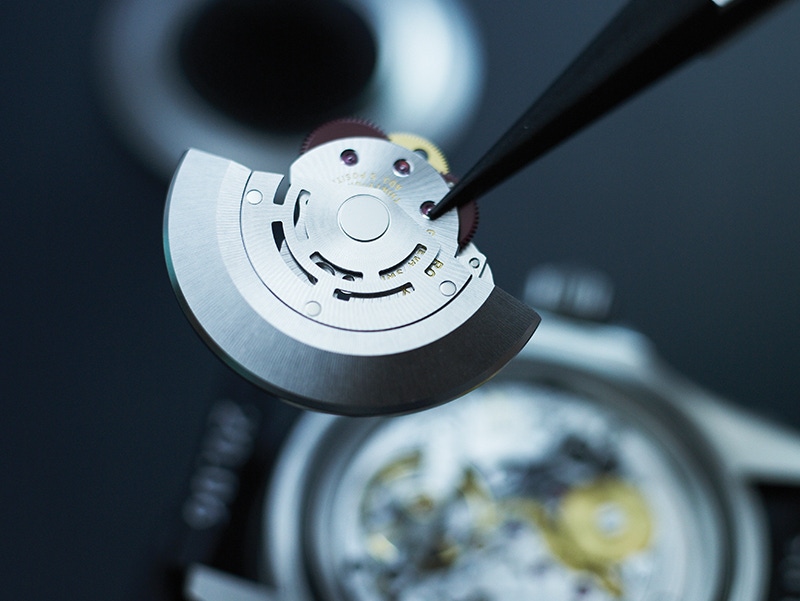
Does technology enhance human ingenuity? Yes, sure. Breguet being one of the very first brands to use silicon for the hairspring to increase precision is an example. But we need to find the right balance — to respect our tradition and the past, and be inspired by it without copying it. At the same time, we have to look to the future by using new materials, new techniques. The LIGA process allows us to produce some pieces that are very tiny, with perfect surface treatments, which leads to new micro- engineering concepts. Breguet was the first watchmaker to use a self-winding mechanism. And it was, at the time, the very first watchmaker to use platinum for the oscillating weight, for its density, in its self-winding watches known as ‘perpétuelles’, starting around 1780.
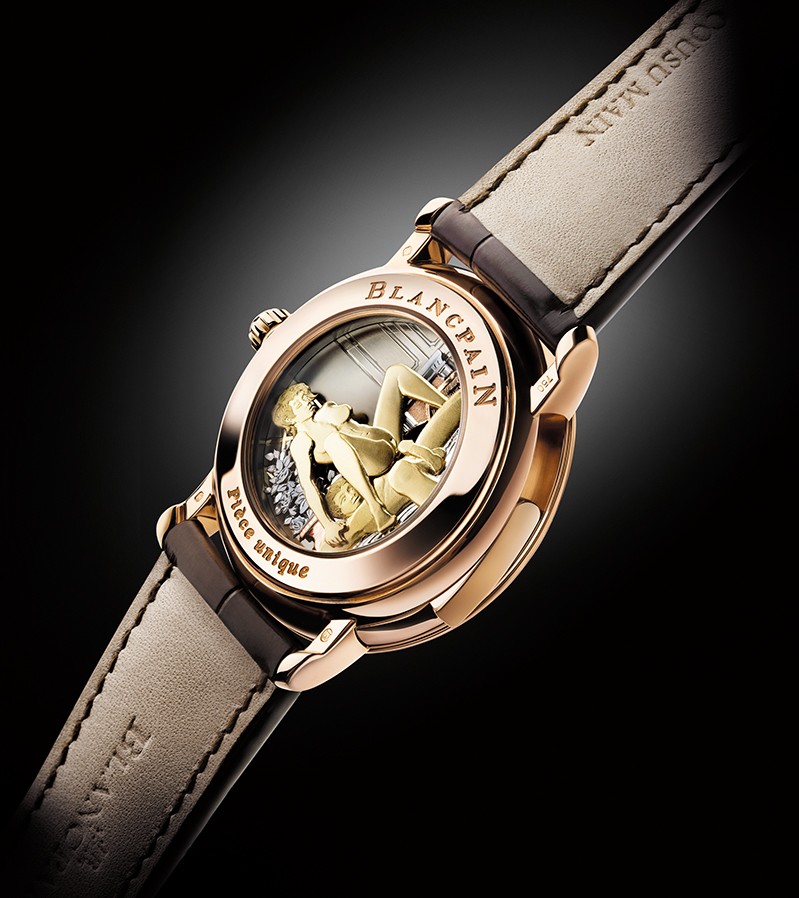
So Breguet has always been advanced with new materials, and we have to keep up the momentum, but at the same time also we have to preserve the métiers d’art: the guillochage, the enamelling process, the bevelling, the engraving, all this centuries-old savoir faire. We have a duty to preserve them. There’s no guillochage school, so we train our own people to do it. It takes not just weeks or months but years to be good at it.
A catalyst moment? Well, I studied microtechnology engineering in Le Locle, where Abraham-Louis Breguet spent almost two years taking refuge from the French Revolution. There, he came up with three great inventions: the Souscription watch — without which I’d not be sitting here talking to you about the brand today — as well as the tourbillon and also the [clock-watch hybrid piece] the Sympathique clock. This is why I studied horology in Le Locle: all this passion, all the knowledge created there, makes it really the heart of the canton of Neuchâtel.
When you learn horology, you automatically learn about Abraham-Louis Breguet. He’s the father of modern horology. He did not invent it, but he modernised it. He was not only a brilliant watchmaker, he was also effectively the first watch designer — at the time, the style was very baroque, whereas he was inspired by the neoclassicism becoming popular in Paris. So he completely redesigned the hands, the numerals, the case. He had so much artistic courage, and it lives on. If you take a Breguet from his day and one from today, you see the connection.


Pushing innovation — advancing the science behind horology — is a duty. When you submit a patent, in Switzerland it lasts only 20 years, but it gives ideas to others: they think of ways to bypass the patent. So when you invent something, it’s great for the whole watchmaking community.
Competition is good. Without it, there is no progress.
Aviation watches are not just a speciality, they are a chapter of the brand’s history. The fifth generation of the Breguet family, Louis-Charles Breguet, even decided to become involved with developing and producing early gyroplanes and helicopters with Charles Richet in the early 20th century, and then co-founded the company [Compagnie des Messageries Aériennes] that evolved into Air France.
Breguet watches are entirely free of the threat of obsolescence. We still now repair some pieces from 250 years ago. Because we have a great restoration workshop, we can reproduce parts from design drawings. We are able to repair any Breguet.
Gen Z is looking for authenticity and sustainability. We want this generation to be connoisseurs, of course, so we need to communicate more about the brand to younger people, and this is also why we have decided to focus on fresher, more direct- to-the-client communications, and showcase more behind-the- scenes activity, demonstrating how the product is made — how our manufacture is not just machines but people, artisans. We’re opening up our workshops so people can visit: it’s not just a case of looking at watchmakers doing their jobs behind glass, you enter into the workshop, you talk to the people, you can try doing guilloché.
We are proud of our duality. We have this French art de vivre combined with Swiss technical expertise. It’s a strong advantage.
We don’t want to innovate for the sake of innovation. It has to benefit the end consumer. New materials are important, but which ones are important specifically for Breguet? Carbon fibre is a great material, but a Breguet must be repairable, and carbon fibre is difficult to repair. Meanwhile, tradition, métier d’art and technological advancement must all be balanced.
Producing patents is easy. Have an idea, file a patent. Having a great idea and developing then industrialising the resulting product — that’s another story. It’s not every year that we will come out with a breakthrough technology, because it takes time to develop, to design, to certify, and so on. But we have many things in the pipeline. Stay tuned for the end of the year!