In Good Spirits: Renais-sance Man
The Watson spirit runs in the vines.

They say that creatives require a certain degree of boredom to come up with more creativity. Einstein called it “the residue of time wasted”. I’m fond of the suggestion that unfocussed, playful time is where we come up with our finest ideas. But I appreciate that il dolce far niente is not easy for those so comfortable in routine.
From lots of practice, I’ve found that the best way to do nothing to reset the mind is to pick a hobby that requires two hands. Fishing, for example. It doesn’t require an awful lot of thinking, but there’s something so therapeutic in the rhythmical casting that allows the subconscious brain to drift. It was somewhere along the banks of the Serein River that Chris Watson sent out an optimistic cast and thought: “I wouldn’t mind planting a few of my own vines in Chablis, you know.”


I’m sure making friends with the locals in Chablis came naturally, as friendships often do through fishing (additionally aided by the fact that Chablis is tiny, and in the ‘90s, I suspect you got to know the butcher, baker, and everyone in between). As the seed of being a vigneron grew in Chris’s mind, he put feelers out for any plots of land in the region in which he could dig in his own Chardonnay vines to cultivate his long-yearned for wine production business. In 1992, having acquired what sounds like a sporadic sprinkling of plots, Chris put down his first vines.
The wines were good, and Domaine Watson started to attain the respect of its neighbours. Little by little, more land became readily available, and Chris Watson was not only accepted as a serious winemaker in Chablis, but celebrated. Today, he is the only English owner and grower in Chablis, as well as part of the Pilier Royal of Chablis: the crème de la crème of winemakers who represent the village and vineyards on formal occasions. Domaine Watson vineyards are all in the plot of Chichée, planted with Chardonnay. More recently, they installed some Pinot Noir vines into the ground in nearby appellation of Irancy. I found all of this out while talking to Alex Watson, Chris’s son, and the founder of Renais Gin. It would seem alcohol runs in the Watson veins…

Alex was born in France, where he lived until he was three before returning to his parents’ native London. He remembers an upbringing amongst the vines, sparking an early appreciation for the glorious process of winemaking. This led to a career in hospitality, including a stint in the marketing department of global drinks giant, Diageo.
“During lockdown, like a lot of people, I had too much time on my hands and started wondering what happened to the grapes after they had been pressed for wine,” Alex tells me. “And then [it] became the idea of a gin…”


“Why not vodka?” I ask. In the UK, we are fairly saturated when it comes to gin. It’s a lovely spirit in which to be saturated, but its omnipresence in our corner of the industry certainly must create challenges for new brands gaining a foothold in the market.
“Vodka, by definition, should be scentless and pure. I wanted to take my favourite aspects from the wine and put them into a gin,” says Alex. “If you take a winemaking view, using limestone and rock salt, the gin reflects a terroir.”
Terroir is a sense of place, the elements that stand out that enable you to identify where the grapes that make a wine were grown. It’s how the Jancis Robinsons of the world can extraordinarily blind taste and distinguish wines down to the very plot. Why shouldn’t this be applied to gin, I suppose?

“We work with Distillerie du Beaujolais in France to get our spirit,” says Alex. “We have to rectify the spirit up to 96% proof and import the grape spirit back into the UK. We then put that into vats that containing Kimmeridgian limestone and rock salt. Like with a mineral water, the gin filters down through, picking up those mineral notes.” Quite the process, and they don’t stop there. “After this stage, we do the gin distillation and maceration process,” says Alex. “We add chardonnay grape juice, and a portion of grand cru grape juice also goes into that distillate.”
Alex isn’t alone on his new business venture – he is joined by his sister, the actress Emma Watson. Although Emma is currently at Oxford University studying creative writing, Alex praises her invaluable input on all the creative aspects of the business.


While Renais is currently exported to 12 countries, including France, Italy, Germany, Australia and Singapore, their focus on the UK remains strong for this beautiful, terroir-led gin. If it wasn’t illegal to consider that alcohol might do you any good, I might suggest that it would make an excellent electrolyte.
Alex’s favourite Renais serve?
A Dry Martini or a Terroir Martini where you swap out the vermouth with a little Chablis.
In Alex’s hip flask…
The Renais Grand Cru addition that we made, over ice with a bit of orange peel.
When he isn’t making gin?
I play golf badly, and love to go to Iceland once a year salmon fishing.
Best martini in London?
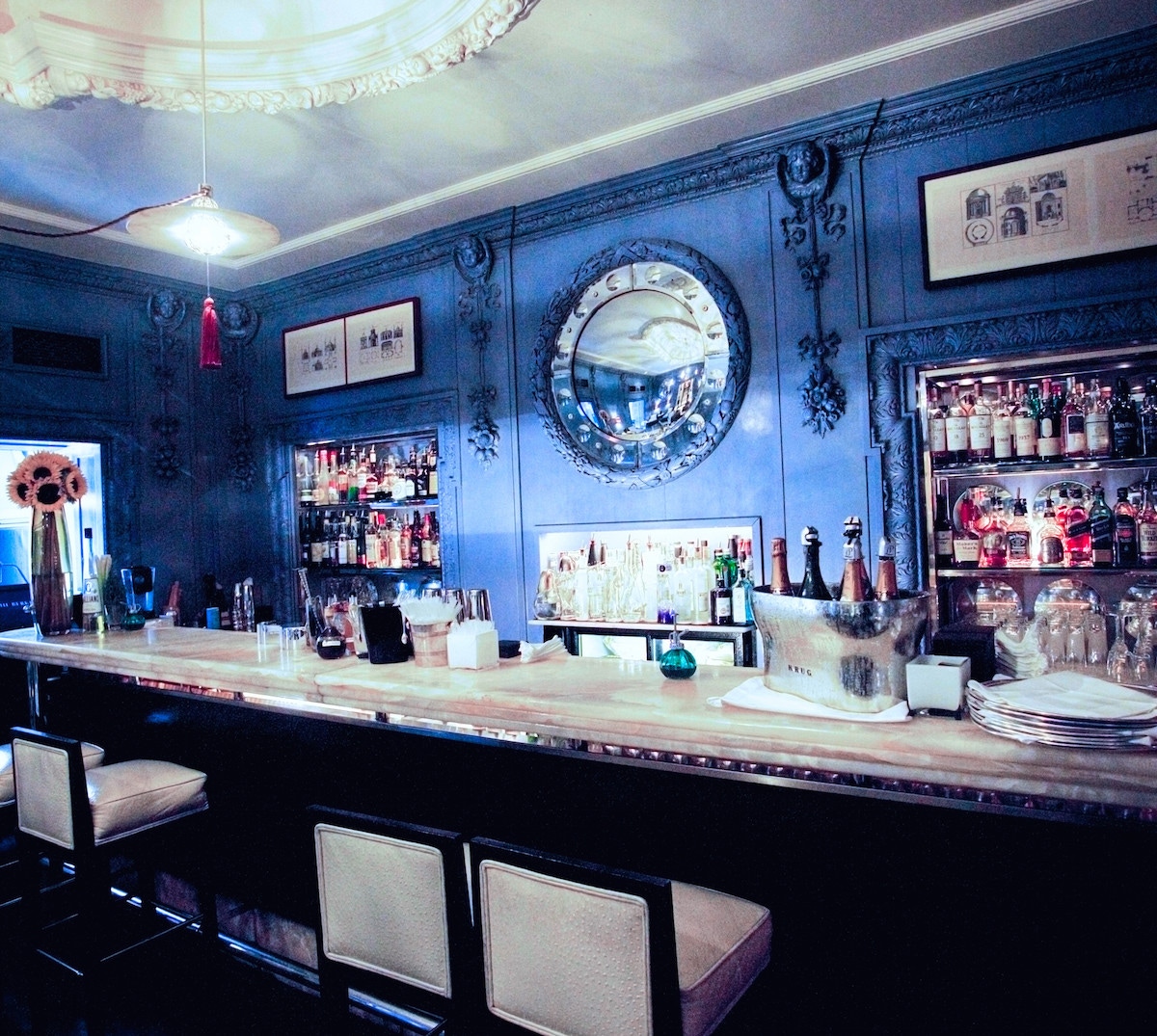
Scarfes Bar is excellent. There is also a really good martini that we do at Dram; they age it in clay pots which really dials up the mineral and saline flavour in the gin. At Fallow, they’ve got a cocktail called the Rhubarb & Custard that they use Renais for.
Renais RRP with an ABV of 40%
Available directly and from Waitrose, £40-45.00