Temporal: Omega
The first watch to be worn on the moon. James Bond. The Olympics and Paralympics... Omega have been part of the fabric of life in the 20th and 21st centuries. On a visit to their headquarters in Biel/Bienne, Switzerland, we talked exclusively to President Raynald Aeschlimann about watchmaking technology, connecting the future with the past, and how he hopes to be remembered.

You have so many touchpoints in the brand’s heritage and storytelling. How do you ensure the brand is not pigeonholed, and you keep it dynamic?
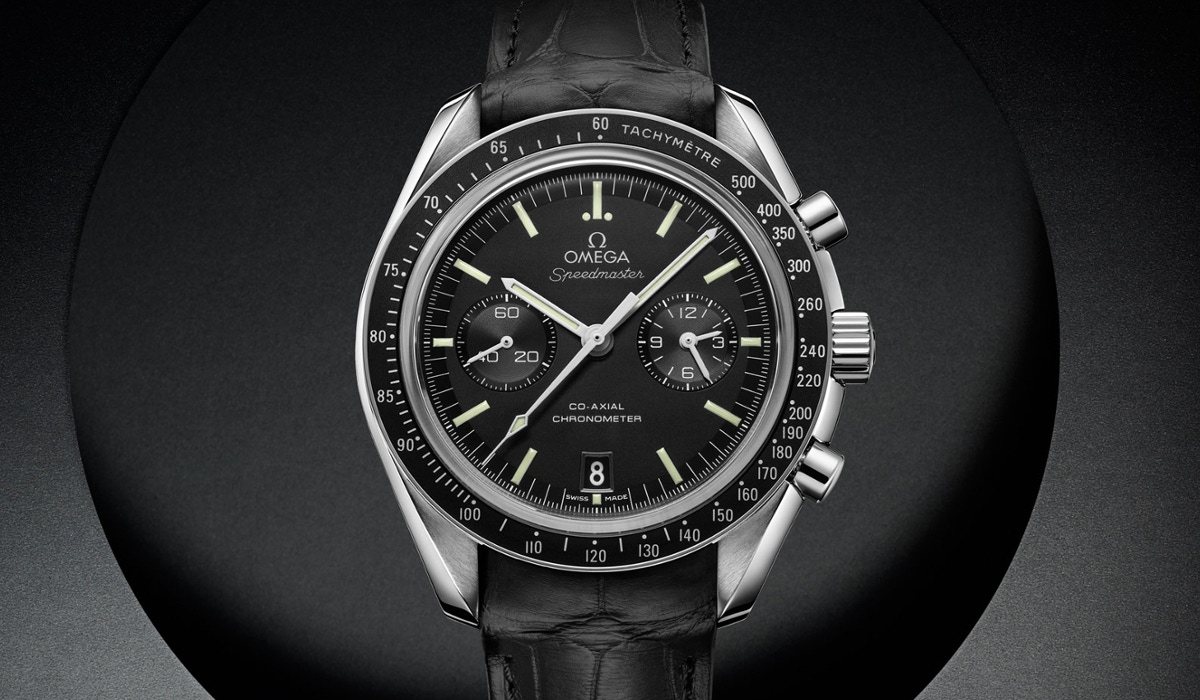
That’s very true — that the big and incredible magic about Omega is having brands within the Omega brands, like Speedmaster, Seamaster, De Ville, that are icons for themselves. But you know what is very interesting, and we have [this] sometimes in the watch industry: we’re not a museum brand. We’re not a brand that because we have a very long history just [talks] about the past. I think what is very important is the whole story about Omega, how it was created and why we are so strong again. It’s just because we’re innovative, just because we want to have innovation in everything we do. I think that’s the biggest word: the respect of our icons. You know, when we launched the Omega in Space again last year, it was about recreating the same emotion but with the technology — Master Chronometer — that is today the best in the watch industry. So, for me, it’s very important that if you do it with respect, coherency and continuity, you can evolve. The icons are there just to give you the motivation and, somewhere, to give you the inspiration of how to do it in a better world.
Yes, because to a large extent, watchmaking has to play two fields. On the one hand you have history, heritage; on the other, even though it is an old art, it is about innovation. They have to be played together and not get in each other’s way. Is that right?
That’s what is very interesting about product development. That’s also what luxury is all about, to me, in the watch industry. That means keeping who you are, making the next generation believe in and be inspired by our lines, with our incredible history, with the revolutions that we’ve been able to do within the last 150 years. But at the same time, making them very modern, very much a mix between who we are and also the modernity of new innovation and technologies. I think that’s also something which is right, because being one of the leaders of the watch industry makes us very responsible to continue to create the inspiration for acquiring our watches — with the whole structure and the whole symbols of who we used to be in the past.

You’ve put a lot of effort into opening — and strategically opening — boutiques all over the world, but also changing how you present yourselves in the digital world. How do you see watchmaking’s future in terms of retail?
Twenty years ago we opened in Zurich our first watch-only store, and it was kind of a revolution because we always wanted first to be very close to our customers. One of the most incredible success factors of Omega today is our client’s concern. We always wanted... this customer centricism, which was very important.
So we did not only open our first store and then, in the meantime, 180 stores, just to sell watches. We’ve been able over the 20 years, everywhere in the world — from Vancouver to China to London and many, many other places — to meet with our customers, to explain our soul, our values, and to be able to encounter them in every place in the world with a lot of success, and that’s what is very important for us.
We have always been very close to these customers, and that was a big asset. Today it is one of the biggest assets we have, because retail is all about being able to make sure the customers coming in are not only buying everything you have but enjoying your values, enjoying your brand. It’s very much part of what’s going to be happening in the near
future. Nobody today is just coming for a watch. Everybody wants to experience who we are. At Omega it’s fantastic because we’ve been able to evolve first, and we have a lot, a lot, to say. That’s why it’s very positive, and that’s why it’s one of my biggest achievements, if I want, that we’ve been able to continue this development everywhere in the world where we feel we can get to these customers and bring our brand close to their heart and their wrists.
How do you pick your ambassadors, and how do you educate them and make them feel part of the Omega family?
I think for me it’s the authenticity which is the most important. The authentic ambassadors are the ones that have been achieving a lot, but by working, by being who they are, and not just by wanting to be number one. I think that’s exactly who we are. We are an achiever’s watch, a watch whose intrinsic values are as important as extrinsic. Of course, we have our territories. We very much love to have golfers, we very much love to have top models, and actresses and actors. But if you think about the last campaign we had — ‘The Little Secret’ — it was exactly about this... It was about authentic models, authentic people that were together exchanging their little secrets but being very much all together Omega ambassadors. And they all feel that they’re enriching our brand.
I think our brand is like a big heart. It’s like love. There’s never any boundaries. It’s always good, and we always have space for the next ones.


You’ve been president for nearly a decade. How would you like to be remembered in that role?
It’s something I always have a bit of an issue answering, because I never ever wanted me to be remembered. But what is very interesting is that to take over such a brand after all these years, you know, it’s the moment where you think, Wow — somewhere the brand will be taken over by somebody, many through difficult times like Covid?
I think very much, and it’s something I felt strongly during Covid. You know, Covid was some kind of awakening for some of the brands — in luxury, in other fields — about, ‘Wow, what are our values?’ You cannot be born within a day agile. You cannot be more dynamic. You cannot change your values and your ecosystem if you don’t know it more people. So my goal — the goal of the management I’m lucky to lead — has always been to create the next steps of the history of Omega. And creating the next steps, like inventing
new technologies, inventing new movements, inventing new design, evolving some lines, is all about the next generation.
So to be remembered as something, we think, would be that you’re just the one making a milestone about a milestone. I prefer to be remembered as the one that created the next milestone instead of just having one. To be remembered as the one that has been able to lead during Covid, lead during all these times of very big macroeconomic problems that we’ve been living through, with some kind of vision. As Mr. Hayek has always done for us, the vision of the future, of the next generation.


Did you feel like that mentality, that credo, was what helped you get through difficult times like Covid?
I think very much, and it’s something I felt strongly during Covid. You know, Covid was some kind of awakening for some of the brands — in luxury, in other fields — about, ‘Wow, what are our values?’ You cannot be born within a day agile. You cannot be more dynamic. You cannot change your values and your ecosystem if you don’t know it very well. One of the biggest assets we always had is our vision. The fact we feel like we’re a family. We know the values. We have our stores worldwide.
The whole exercise made it even more clear to me that, yes, we are strongly Swiss-made — but, yes, we are also present everywhere in the world. And the values we have helped us to get through, because there was always some kind of sunshine somewhere during all these years, and it was easier for me, because of this, to ask my people, to ask my colleagues, to do the extra mile, because they have that somewhere already in their soul and in their efficiency.
So it was very, very interesting, and I was very proud, even though it was difficult, because there had never been that many decisions to be taken on a daily basis. It was very satisfactory for me to see that there was always the understanding: yes, we create the next success, maybe not tomorrow, maybe not in one month — but we are there. We stay there. And we stay who we are.