Who is The Rake: Vincent Price
Vincent Price had the rare distinction of not looking ridiculous in a cape, and it helped make him the movies’ merchant of menace. But there was much more behind the mordant wit and moustache.

The voice comes in at around the four-minute, fifteen-second mark: “Darkness falls across the land/The midnight hour is close at hand... ”
Michael Jackson’s Thriller has spent its preceding running time effortfully conjuring some skittish chills, but now Vincent Price’s monologue has arrived to administer the coup de grâce. Or perhaps that should read camp de grâce. One still marvels at the way his melodramatic tones — as stentorian as a Roman senator, as plummy as a Chilean merlot that’s somehow leapt from the cellar and acquired the power of speech — wrestle funk-isms like “y’all’s neighbourhood” and “getting down” into helpless submission before climactically erupting into the kind of hollow Dr. Evil cackle that Price had practically patented: putting the purest Iberico ham into Hammer horror.

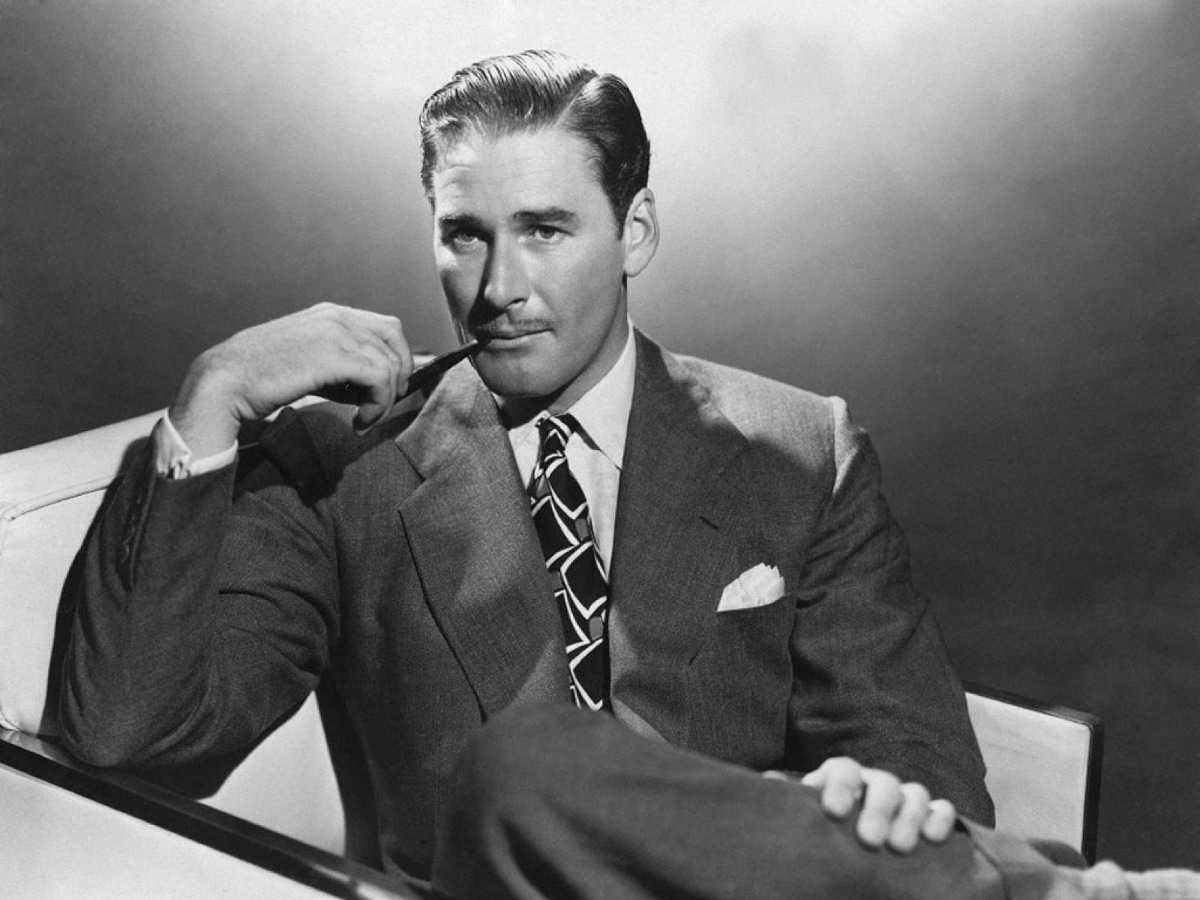
By the time of Thriller’s ascendance, in 1982-83, Price had been doing his macabre-genius thing for the best part of three decades, as the titles of his best- known films — House on Haunted Hill, The Abominable Dr Phibes, Witchfinder General — can attest. It didn’t hurt that he presented as a Goth overlord e-fit: imposing six-foot-four height; beetle-browed complexion; turned-down pencil moustache demanding to be accessorised with a pair of pointy fangs; and a penchant for scarlet ascots and louche velvet smoking jackets. He even had the rare distinction of not looking ridiculous in a cape. But there was more to him than his officially sanctioned role as the Dean of Dread; in fact, with his moonlighting as an art collector and connoisseur and a European architecture buff and gourmand (he had his own T.V. cookery show decades before the era of the celebrity chef ), a case can be made for Price as a kind of 20th-century renaissance man.
Not that he seemed moved to put the case himself. He frequently resorted to Edgar Allen Poe’s classic line from The Raven when asked if he objected to being typecast as a villain, despite only about a third of his hundred-plus films being horrors: “Nevermore.” He told The Los Angeles Times in 1985: “It’s the fact you are typecast that gives you your fame. We were all very serious about our horror pictures. Boris [Karloff ], Basil [Rathbone], Peter [Lorre] and I knew we weren’t doing Hamlet, but we also thought we were doing marvellous entertainment.”


We were very serious about horror. [It wasn’t] Hamlet, but we thought we were doing marvellous entertainment.
At the same time, the erudite and worldly Price didn’t appreciate being underestimated. He was irked by his flat $20,000 fee for the Thriller ‘rap’, particularly as the album became the biggest-selling ever. Michael Jackson sent him framed gold and platinum albums in an attempt to compensate, which Price turned into a mock altar with candles and floral tributes. Later, as Jackson became mired in lawsuits from the families of boys who alleged molestation, Price declaimed: “All I can say is that Michael Jackson fucked me — and I didn’t get paid for it!”
With his mordant wit, patrician vowels and cocked- eyebrow irony, many people were shocked to discover that Price wasn’t, in fact, British. He was born in St. Louis, Missouri, on May 27, 1911. His was, however, a life of privilege. His grandfather invented Dr. Price’s Baking Powder, whose miracle ingredient — cream of tartar — established the family fortune, and his father, for whom Vincent was named, ran the National Candy Company. He developed an early taste for art — buying his first piece, a Rembrandt etching, for $37.50 (in $5 instalments) at the tender age of 12 — along with movies, theatre, literature, museums, fine tailoring, and his mother Marguerite’s even finer cooking. “She was a one-woman home economics class,” he once said of her. “We learned about the preparation of food. We learned about sewing. I still mend suits, and I do it very well.”
According to his daughter Victoria’s biography of her father, Price saw his first horror film in 1920, a German expressionist silent called Der Golem, in which the titular clay monster from Jewish folklore comes to life. It had the desired effect, according to Price: “I wet my pants.”


He majored in art history and English at Yale before, thanks to a $900 gift from his parents, decamping to London in 1934, indulging his already marked Anglophilic bent while studying for a master’s degree in art history at the Courtauld Institute. He cut classes to become a West End mainstay, catching Sir John Gielgud’s Hamlet no fewer than 11 times, and found his skills as a silky raconteur in high demand, hovering on the fringes of the pre-war Bright Young Things set; according to a contemporary associate, Price could “make friends with a dead man”.


Price’s interest in acting had fallen on fallow ground in post-Depression America; now, among the London demi-monde, he successfully auditioned for the part of Prince Albert in the play Victoria Regina, alongside Helen Hayes as the Queen. The play transferred to Broadway for an 18-month run, where Price’s salary leapt from £5 to $250 a week, and led not only to a stint in Orson Welles’ famed Mercury Theatre — “Orson was just a kid of 22 at the time, but he was the finest director I ever worked for,” Price recalled — but to the attention of Hollywood, where he quickly specialised in the portrayal of decadent dandies and ennui-stricken fops, among the most indelible of which were the caddish gigolo in Laura and the cynical monsignor in The Keys of the Kingdom (both 1944) and the murderous aristocrat in 1946’s Dragonwyck.
But it was the nascent horror genre in which Price really found something to sink his incisors into...